
5 min read
As per last week’s post, you selected an industry to invest in, and now you want to choose either a stock or a fund covering it. There are many options available, and your success depends on your selection. It is usually very difficult to pick an outperforming stock since all publicly available data is already built into the price according to the Efficient Markets Hypothesis. However, you can still perform certain checks before making a decision. Selecting a fund is easier than selecting a stock because it already includes many stocks, giving you higher chances of growing with the market. Nonetheless, there are still important factors to consider.
Let’s start with a basic stock analysis using freely accessible data tools:
1. Historical Data
Past performance doesn’t necessarily indicate future returns, but it is still useful to check the historical price chart of the stock you want to invest in. You can simply google the ticker (stock market symbol) of the stock to see its price chart. If the stock has been in a downward trend in recent years, despite the industry growing (you can check the industry benchmark online, which I will explain shortly), this may be a red flag, and you should be cautious. There is extensive academic literature on the profitability of contrarian (buying past loser stocks and selling past winner stocks, assuming they will normalize their returns) and momentum (buying winner stocks, assuming they will continue to perform well) investment strategies. While these strategies can hold true in certain markets and periods, it is still advisable to check historical returns to understand why a stock did not perform well even when its industry was thriving.
2. Earnings Announcements
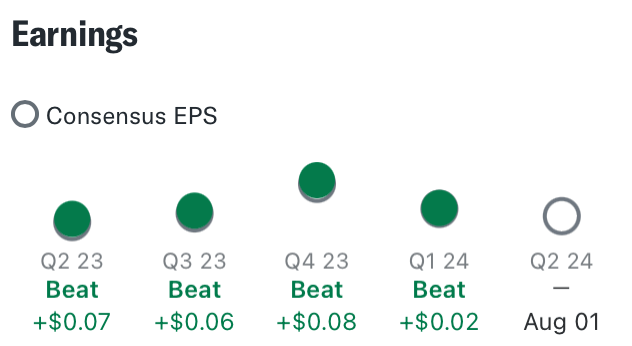
You can search for the stock ticker on Yahoo Finance and find the Earnings section under Research Analysis. Check if the company has been beating expectations in recent quarters. If it has, this is a good sign that the company is delivering reliable results.
3. Price/Earnings Ratio
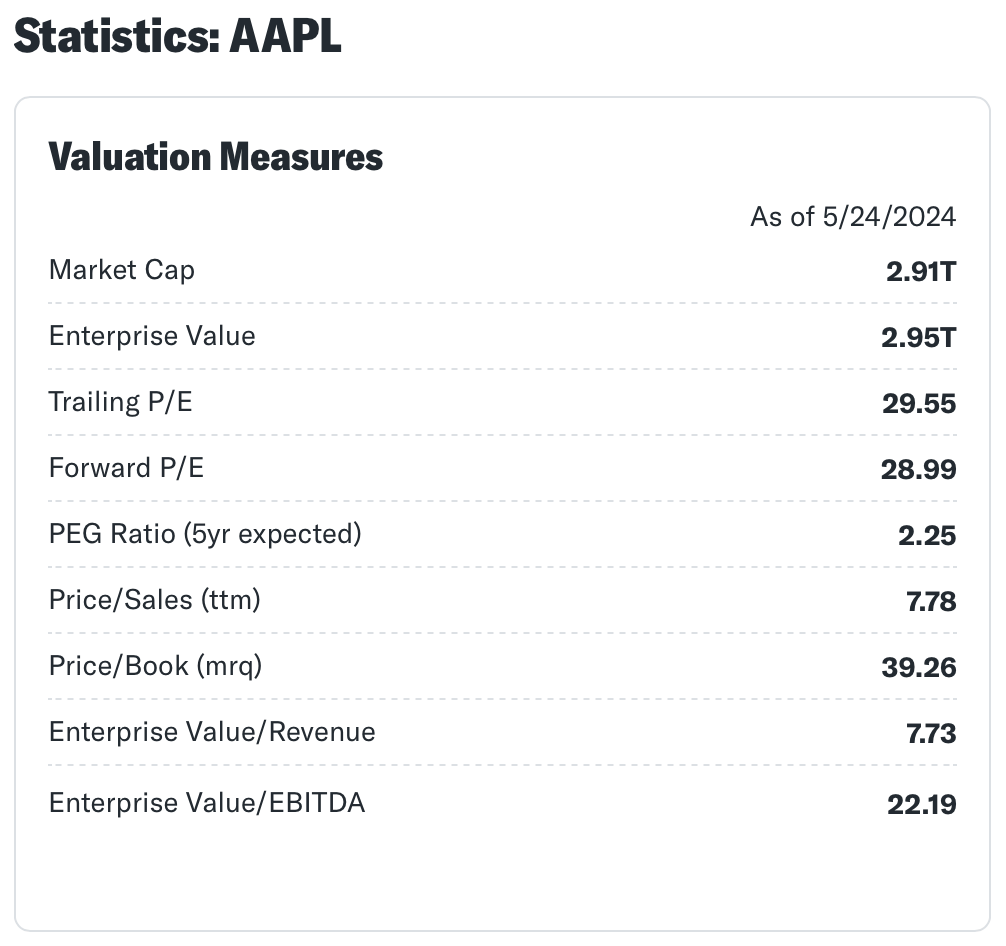
On Yahoo Finance, go to the Statistics section and check the Trailing P/E (which compares a company’s current share price to its earnings per share over the past year) and Forward P/E (which compares a company’s current share price to its projected future earnings). Trailing P/E is based on actual performance, while Forward P/E is based on future performance. Compare these ratios to competitors or the industry average to understand how the stock has performed and is expected to perform. Higher ratios may indicate an overvalued stock or high profit expectations, while lower ratios may indicate an undervalued stock or low profit expectations.
4. Company News
Check recent news about the company and its investments. For example, a Pharma company may be awaiting the results of an experimental drug, which could be a good time to buy if you want to bet that it will be a success. If you want to investigate more, read their latest quarterly reports to understand what their CEO/CFO thinks about the current and future outlook.
There are many other analyses you can perform, but the above steps provide a good start for your stock-picking journey. Now, let’s continue with choosing a fund:
1. Expense Ratio
Look for funds with a low TER (total expense ratio), ideally lower than 0.1% for exchange-traded index funds (ETFs). While this may not seem like much, you will pay this fee whether you made a profit or a loss in the year. For example, if the ETF made a 1% positive return, a 0.1% fee is 10% of your return, which is significant.
2. Portfolio Composition
You can search for funds on justetf.com and filter by geography, industry, etc. Pay attention to the composition of the fund, including the number of stocks (diversification), average P/E ratio, investment style (value, growth, or blend), market capitalization (large, mid, or small), geography exposure, industry exposure, currency exposure, and more. Choose the fund that matches your investment goals.
3. Dividend Distribution
Funds either reinvest the dividends or distribute them. This depends on personal preference and your investment style. Tax implications are also crucial; some countries may tax distributed dividend gains but not reinvested ones. For more information on dividends, you can read my previous post here: The Free Dividends Fallacy.
4. Performance Against Benchmark
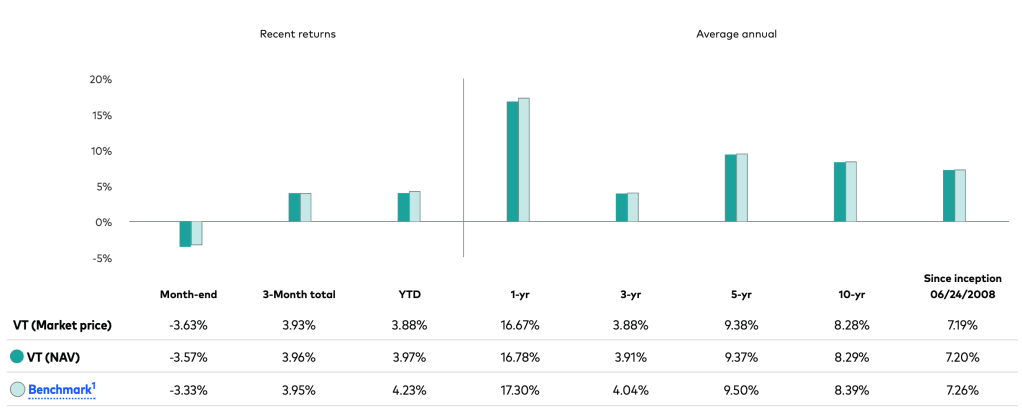
Compare how the fund is performing against the benchmark. This information is usually available in the fund’s info sheet. After finding your preferred fund, you can google its ticker and check its page from the fund owner directly. Ideally, you should expect the fund to perform similarly to the benchmark.
5. Fund Size and Age
Check the size and age of the fund, as larger funds typically offer more liquidity and safety. Additionally, older funds usually have more trust in the market due to their longer track record.
Selecting a fund is relatively easier than selecting a stock, as mentioned earlier. I prefer focusing mainly on funds to diversify your investments and grow with the market. However, no matter how much research you do or how educated your guesses are, markets can prove you wrong in the short term. So, don’t be too hard on yourself. Focus on staying in the game, investing in something stable, and maintaining a long-term perspective.

 Thirteenth Salary
Leave a reply to Anonymous Cancel reply